Watering
The following was extracted from information available on the internet, and from personal experience.
Proper watering practices are a key to getting healthy, bountiful vegetables, herbs and flowers, particularly during the hot, sunny days of summer
There are four aspects to good summer watering practices:
Mulching.
Consistent watering – avoiding too much and not enough.
When and how to water.
Measuring soil moisture – be informed before watering to avoid over-watering.
Mulching
A key to good soil moisture management is mulching. The benefits include:
Keeping the soil cool during summer heat. For example, for leafy greens, mulched soil could help delay ‘bolting’ (when they become bitter). Tomato plants would be less affected by heat stress.
Having to go to the garden less frequently for watering. A 2-inch (5 cm) layer of straw can reduce the need for watering from every day or two, to every 4 to 7 days.
Suppressing unwanted weeds.
Helping to keep fungal and bacterial spores from splashing up from the soil during rain and watering. This can be especially beneficial for plants like tomatoes, which are sensitive to blights and bacterial speck disease.
Helping to avoid surface soil compaction during watering. Compacted soil can block oxygen permeation into the soil that is needed for healthy roots.
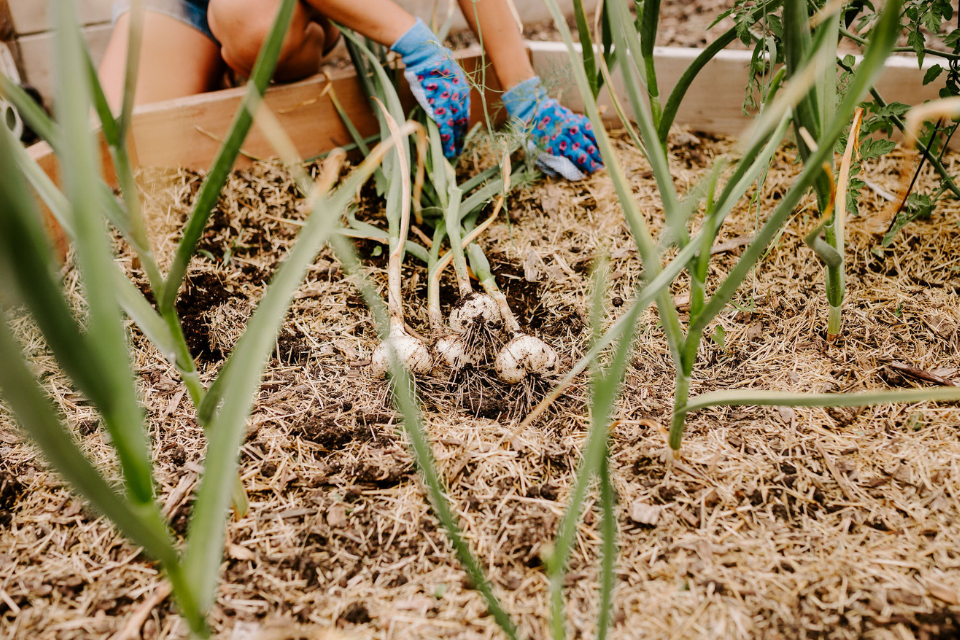
Straw mulch around garlic.
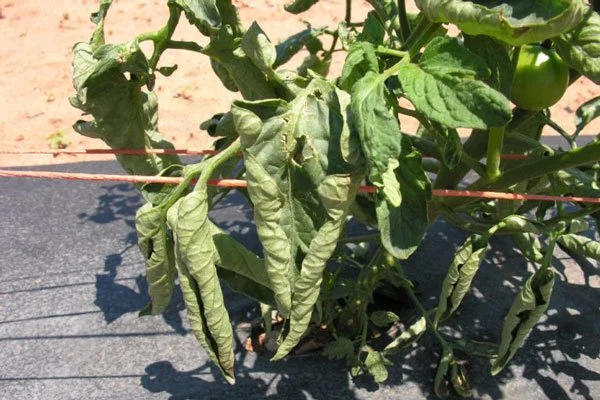
Tomato leaf curl from heat stress.
Consistent Watering
For our community garden establishing a general rule of thumb is not realistic. Much depends on whether mushroom compost is used and / or straw mulch. Also, some plants (like leafy greens) require consistently moist (not wet) soil, whereas some, like herbs and hot peppers, do better if ‘stressed’ a bit by letting the soil dry out somewhat.
For mature plants, in the dry summer months, without a straw mulch, it is better to give a deep watering (1 – 2 inches) every 2 to 3 days than daily. With a 2-inch straw mulch, once a week may be sufficient.
Why not a daily watering? It can lead to shallower, weaker, roots which can make the plants more susceptible to heat stress, and diseases. If there is no mulch, soil surface compaction can also happen.
Deep watering too frequently, i.e. keeping the soil soaked, can fill up air passageways, which could suffocate plant roots (as they need oxygen). Plant stem rot at the soil level can also occur.
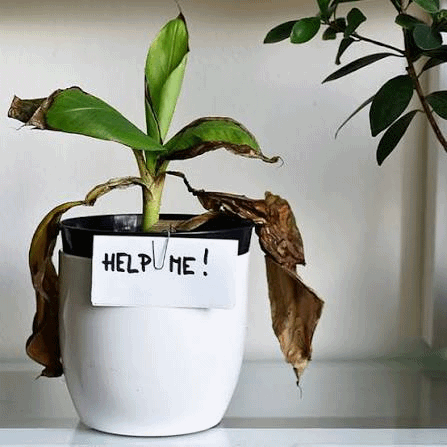
For herbs, overwatering can lead to less flavour, as the essential oils become diluted in favour of plant growth, i.e. more green foliage, but less flavour. Similarly for hot peppers, in that they may have less ‘punch’. For plants such as tomatoes, overwatering can lead to blossom end rot, due to poor calcium absorption (note that mushroom compost has a fair amount of calcium), from water logged soil
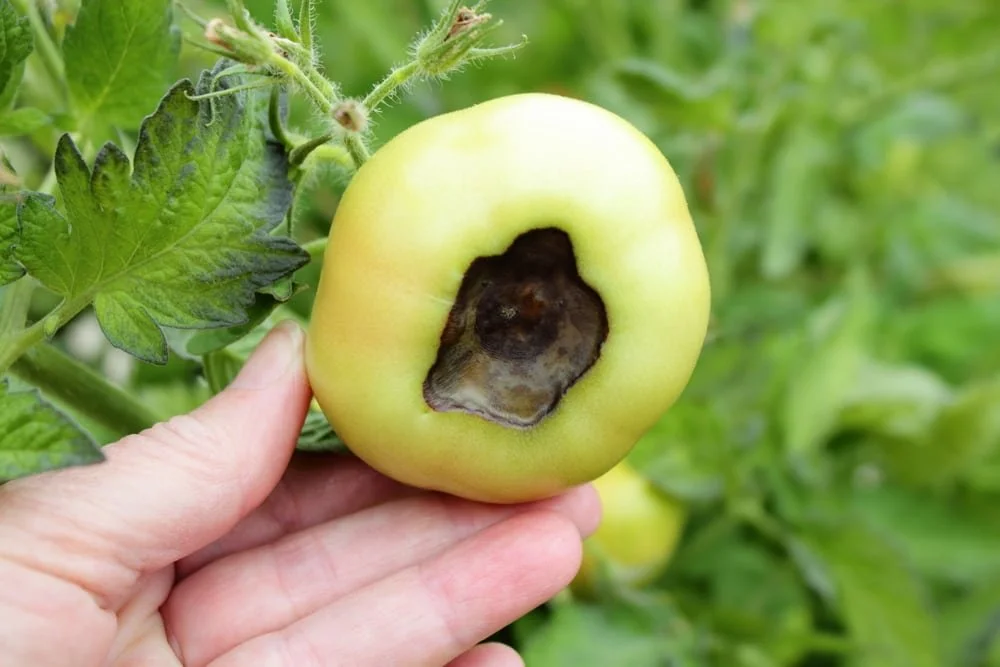
Blossom end rot in a tomato due to lack of calcium.
On the other hand, letting the soil dry out can overly stress plants, and they could wilt. In the heat of a sunny summer, plants ‘sweat’ (transpiration) – there are pores in the underside of leaves that take in carbon dioxide from the air and release oxygen. They also give off water to cool the plant (sort of like we sweat to help us cool down). If there is not enough water intake from the plant roots, the cooling system can’t keep up, and the plant wilts. If this is not remedied within about a day, the damage can become permanent. Plants with shallower roots and a lot of leaf surface, like leafy greens, can be particularly sensitive.
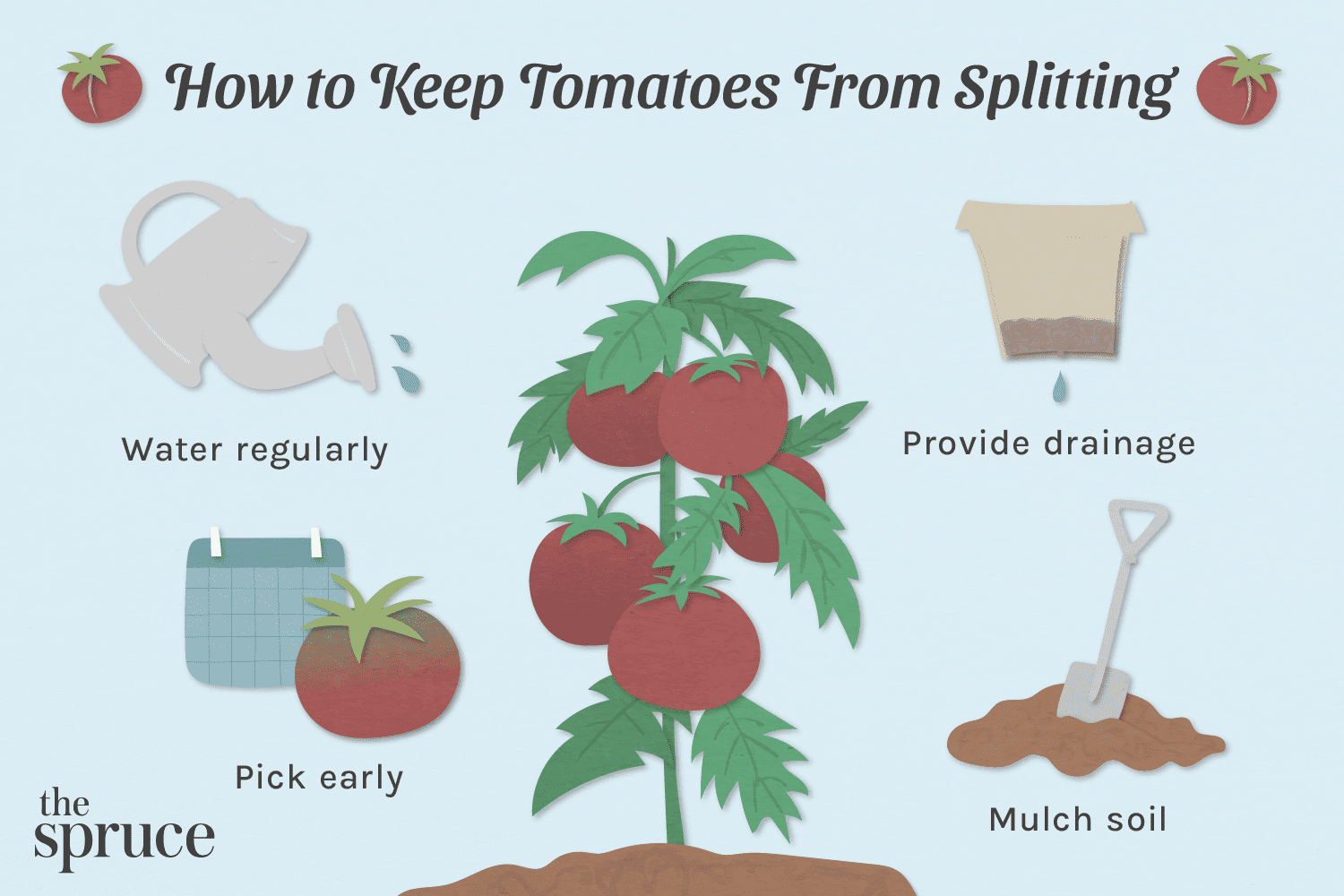
Tomato plants require consistent watering. Inconsistent watering, cycles of too dry to too wet, cause the fruit to crack / split – the inside swells faster than the outside can expand.
How and When to Water
In general, it is better gardening practice to avoid overhead watering, in particular if straw mulch is not used. If overhead watering cannot be avoided, it should be done in the morning, before the heat of the day, to allow foliage to dry out: water droplets can act like miniature magnifying glasses and cause leaf burn.
Overhead watering should not be done late in the day / evening, as it can promote fungal diseases like powdery mildew, which, if not checked using, e.g. a potassium bicarbonate solution, can stunt growth, particularly affecting cucumber and squash plants. Rain and morning dew can also contribute to such diseases.
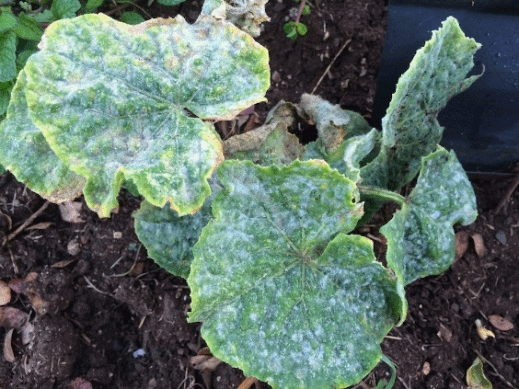
A severe case of powdery mildew.
Measuring Soil Moisture
A simple surface soil test is to poke a finger into the soil, up to about a finger’s second knuckle (about 5 cm / 2 inches). If it feels dry, water. If it feels wet, hold off. This is useful for shallow rooted plants, where surface soil moisture is important.
For plants with deeper roots, such as tomatoes, surface moisture may not be a good indicator of moisture further in. A soil moisture tester should be used, such as shown below. There is one available in our tool shed.
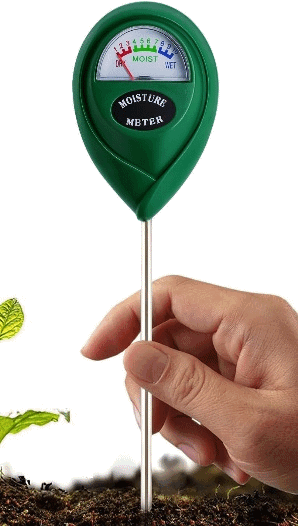
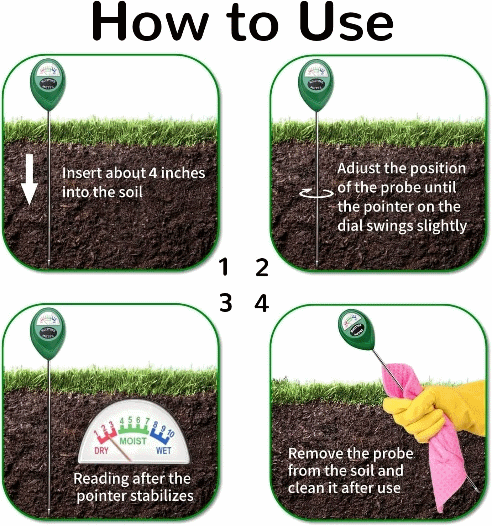
For hot peppers and herbs, the moisture can go into the red zone before watering. In all cases, avoid going into the blue, wet, moisture zone.